
How to keep your rabbits indoors.
We rehome rabbits to both indoor and outdoor set ups. This is our guide on the modern way of keeping rabbits indoors and keeping them safe, healthy and happy. We do not rehome to less than 60 square foot of space.
Housing Types
We absolutely will not rehome to a standard rabbit “cage”. Rabbits need far more space than this.
Enclosures
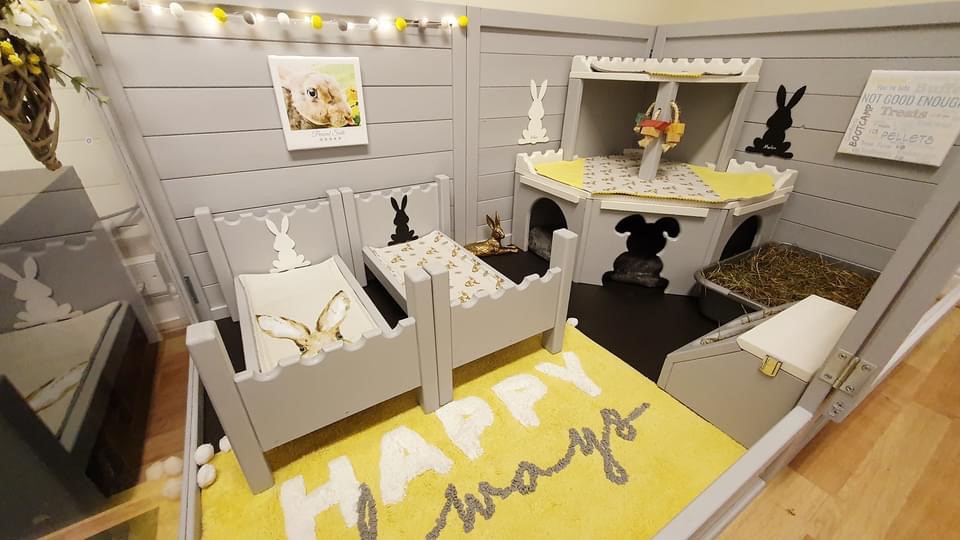
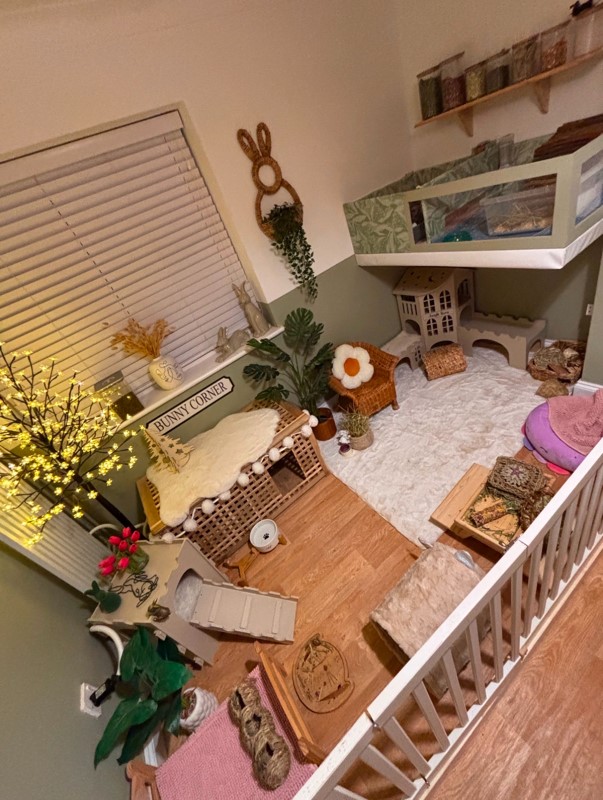
Enclosures are a great option to keep rabbits safe, especially when you can’t be home to supervise. We would prefer these are a “base” and the rabbits get the option to explore around a larger bunny proofed area when they can be supervised. They will require at least two to three multi-exited hidey holes and they will love to have a few litter trays and other places to snooze and nibble hay. Here are some lovely examples of indoor enclosures we’ve rehomed to:

The Spare Room
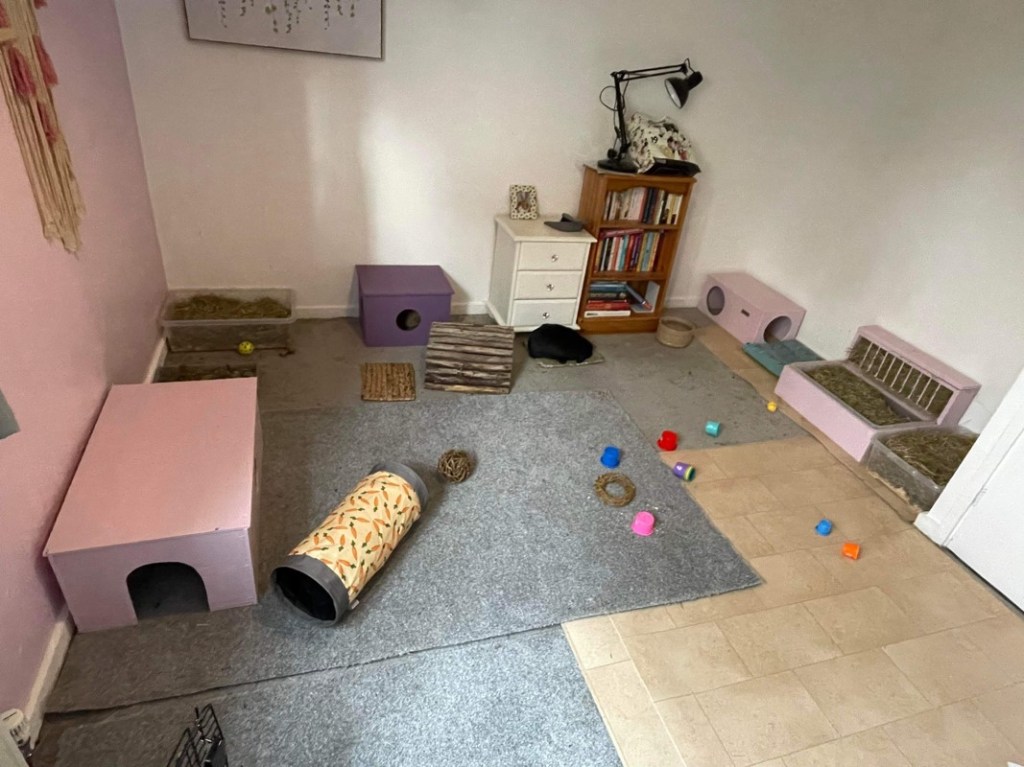
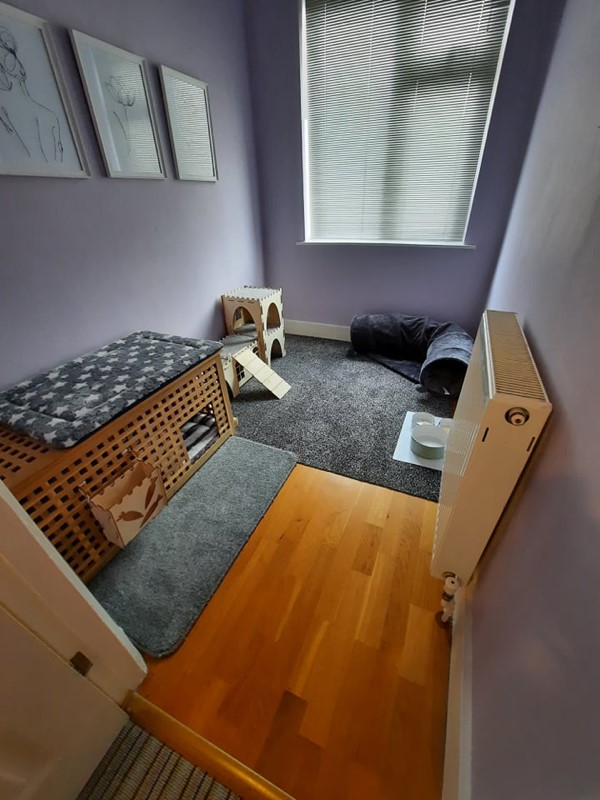
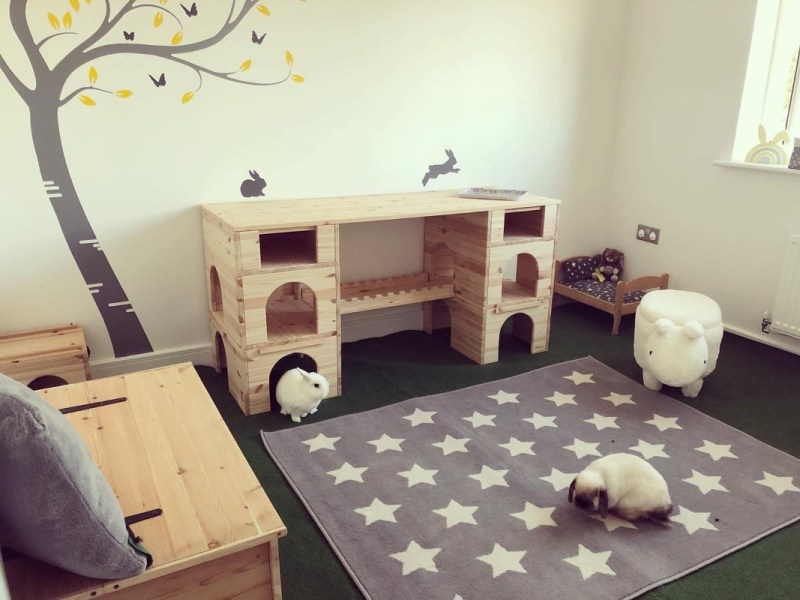
If you’re lucky enough to have a room that isn’t really doing much, such as a box room or unused bedroom, this can be a great place to adapt to the “bunny room”! You can fit in as much enrichment as you like, there’s always room for more hiding places, and you get to go and sit in with them and spend as much time with them as possible. Here are some stunning bunny rooms we’ve rehomed to:

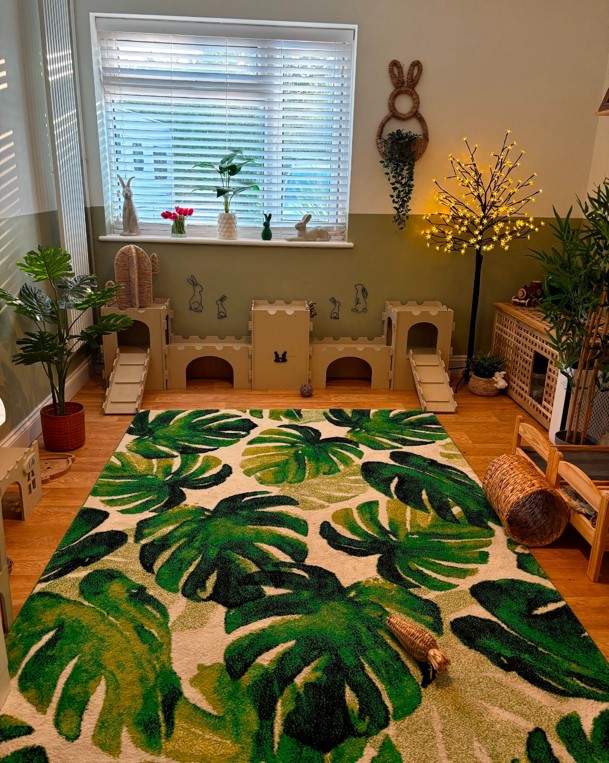
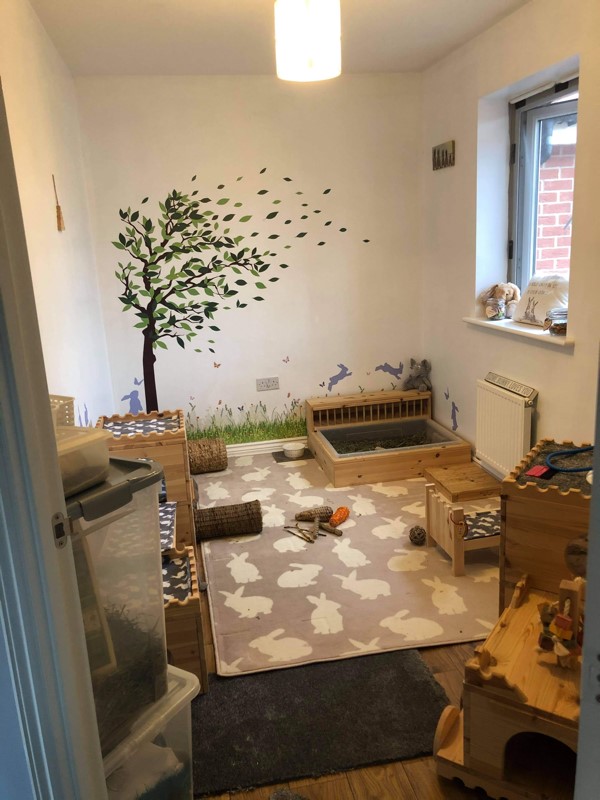
Free Range
If you’re able to have your rabbits free ranging in your home, either your entire home or several rooms, that is fantastic. We will ask that these rooms are thoroughly bunny proofed, such as wires tucked away and furniture carefully considered as they may be chewed on or urinated on. We will also ask that the rabbits have a “base” area with their hay, and lots of bunny safe hide outs. Here are some lovely free range homes we’ve rehomed to:

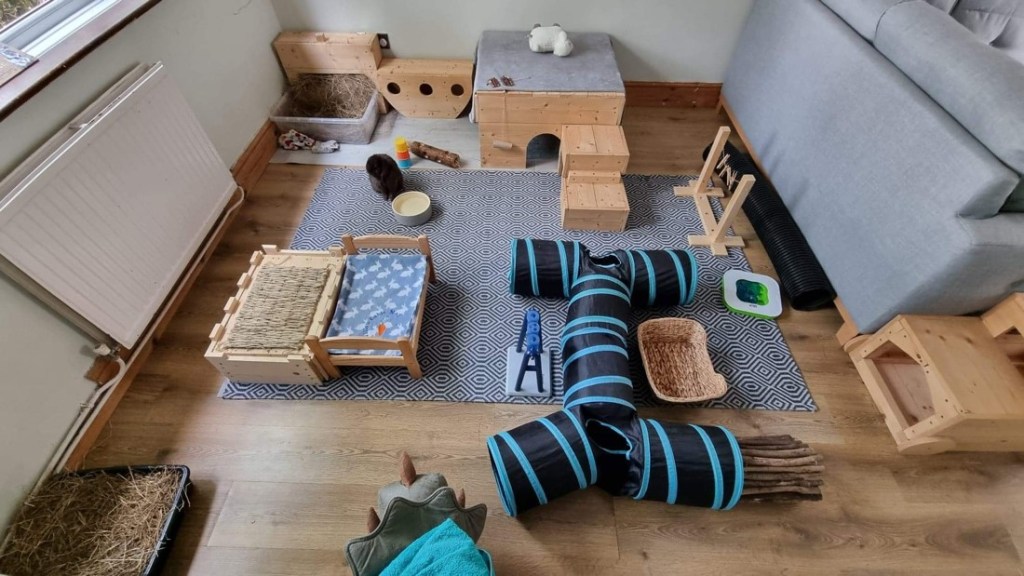
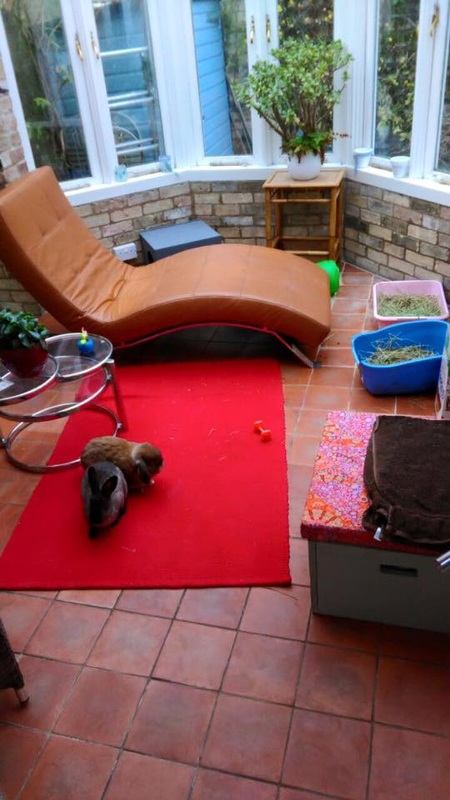
Flooring
Flooring indoors does take some consideration. Rabbits can be destructive, some more than others, so think carefully!
Many of our adopters recommend washable rugs and vet bed. Rabbits can find some solid floors too slippery, so having some non-slip mats available is a must. Be careful with carpet, some carpet can be surprisingly abrasive to little paws and may cause sore hocks.
Bunny-Proofing
One of the most important aspects of keeping indoor rabbits safe, is bunny-proofing.
Anything wooden can be fair game to rabbits, and some woods or wooden-type furniture can be toxic if chewed, such as composite woods. Rabbits will also chew on skirting boards and wooden doors, preventing access where you can is the best way to avoid damage.
Can indoor rabbits go outside?
Yes, and no. If you would like your indoor rabbit to have some garden time, that’s great! But there are some considerations.
First, is your garden rabbit proof? Or will you use an enclosure outdoors? You need to make sure that your rabbit will safe and supervised when outdoors as predators can turn up at any time, and rabbits are very good at plotting escapes!
The weather is the second consideration, rabbits can struggle with sudden changes in temperature. So taking your indoor rabbit outside from a centrally heated house to a frosty winter’s day is absolutely not recommended. If you’re desperate for your rabbit to experience snow, bring the snow indoors in a tray for them to play in instead!
We don’t recommend putting rabbits on leads or leashes and harnesses. While some appear on social media to be happy on a leash, it can end in disaster. It can take just seconds for a panicked rabbit to get out of a harness. If you pull on a leash, it can feel to the rabbit like the harness around their ribcage is a predator grabbing hold of them and lead to panic and injury. It’s just not worth the risk.
Our No-Nos
Unfortunately most housing sold on the high street is not suitable for rabbits.
Plastic Cages
Just so small, so very small. These tiny cages were not designed with rabbit welfare in mind and we will not rehome to them. The only plus is those plastic bases, with the wire thrown away, make excellent litter trays for rabbits to hop in and out of!


 The Rabbit Residence Rescue